A Conversation With Susan Lintonsmith, President/CEO, Regis Corporation
speaker-0 (00:00)
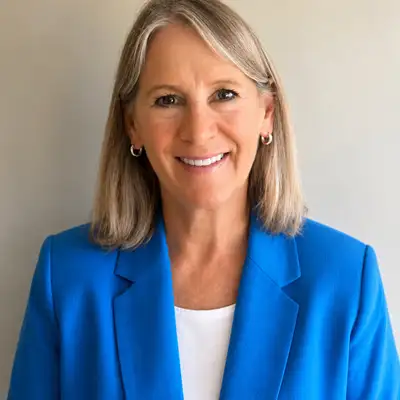
Hello and welcome to the Failure Gap, where we talk with leaders about closing the space between agreement and alignment. We love talking with interesting people, and today we're joined by Susan Lintonsmith. Susan is currently the president and CEO of Regis Corporation. Regis has brands like Supercuts and Roosters and is the beauty industry's global leader in beauty salons and cosmetology education. The company franchises, owns, or holds ownership interest.
In more than forty eight hundred locations worldwide. Susan, welcome to the failure gap.
speaker-1 (00:33)
thank you. Happy to be here.
speaker-0 (00:36)
Yeah, I'm so looking forward to this conversation. You've had such an interesting background. And I would love for you to give our listeners, before we jump into agreement to alignment, give our listeners a little bit of your story and some of the twists and turns that led you to being the CEO of Regis.
speaker-1 (00:54)
And this could probably take up your entire podcast, but I'll try to keep it try to keep it short. So yeah, so I have about 35 years of experience in consumer brands, global brands, everything from, you know, big big global to even startups. ⁓ but got my start, started off in marketing out of graduate school. And the last thing I thought I would do is go into restaurants because I worked through through restaurants just to get myself through school because I could earn the tips and
Get a little more money. But then I came out and loved the really loved the culture and the people that I met when I was doing the recruiting process and and spent so spent my first eight years with Pizza Hut, then moved to Coca-Cola, moved to other great companies like ⁓ Whiteway Foods, which was part of it's Denon now, but it was port part of Dean Foods at the time. Red Robin. So I was the CMO of Red Robin for several years before moving into.
the CMO position at Quisnos. And it was at Quiznos where I moved from CMO into the CEO role. I know that a lot of people sometimes are like, how do I go, you know, from that level into the CEO role? So we can talk about that at some point as well. ⁓ From there is where I moved into the beauty services industry. And that's when I took a job out after we sold Quiznos and I was looking for my next opportunity.
There was one very close to my house for ⁓ the CEO for Elements Massage. And that's working with massage therapists, very much focused on massage therapy. And that gave me the flavor for beauty services, which I love. I love working with franchisees. That's something that has always been near and dear to my heart. And that was 99% franchise, very similar to Quiznos. So you can kind of see the link between not only consumer brand, but also a franchise brand.
And then from there, I took a very different step, which was going from franchiseur most of my career to being a franchisee and running a franchise business for European Wax Center. And I did that for about three and a half years. Meanwhile, I was building my board business. So I sat ⁓ currently I'm on four boards, including Regis, but I joined that board in January of 2025.
became the board chair. And then sometime in the ⁓ late 2025, they asked me, you know, if I would be interested in taking the CEO role. And I had to really think about that because I love the business, love, love beauty services, love hair services. But it's a real commitment to step into a public company CEO role. And I enjoyed being the board chair. but I started that. I said yes and I'm
Very excited to be in this role, but took it in March, mid March. So I'm starting my fourth month. ⁓ and I'm very grateful that I've done this and I'm having a great time.
speaker-0 (04:01)
That's awesome. And I feel like you've just, as you describe your career, you said yes to a lot of things, including this role. And that I think is one of the secrets of navigating the twists and turns of a career that is 35 years or so into your run. And I I think that's so interesting to say yes to a lot of different kinds of opportunities. And then also you mentioned making that move from CMO to CEO.
I would love it if we could just double-click on that for a second because I think that is a, as you say, a step that a lot of people are very interested in. And it feels like the CFO or the C chief strategy officer might be a more ⁓ common path. And being the CMO and being able to step into that CEO role is less common in my experience. So can you just tell us a little bit about what that looked like for you?
speaker-1 (04:56)
I can. Yeah. Thank you. That's a great question. First off, you said saying yes. And I I thought that was a real insightful comment because I remember once being asked, you know, w what do you want to be 10, 20, 30 years, you know, at really at the very beginning of my career. And if I had mapped it out, I'm not sure it would have aligned with what I actually did. Because along the way, opportunities presented themselves where I was like, wow, that would be a great.
Opportunity for me to learn. I love learning and I love sharp learning curves. And I'm one of those ⁓ people that I I can get very bored easily and I have to be challenged. So saying yes, I think, you know, when something falls in your lap, especially is is a good thing. And it was a good thing for me. But ⁓ fast forward, ⁓ what happened? Because I really ⁓ look, at Quiznos, we had a lot of turnover at the CEO level. So I was
on my fourth year and on my fourth CEO. So a lot of change. Yeah. Yeah. My second week on the job, the CEO who hired me, I found out, was being turned and got a new CEO. So it was it was a lot of ⁓ change. And I just I just didn't say, I didn't set my eyes and say, you know what, I'm going to be the next CEO. I just figured, you know, with a board that was very predominantly financial oriented.
speaker-0 (05:57)
That's a lot.
speaker-1 (06:19)
And me being more marketing and ops oriented, I honestly was like, didn't didn't set my sights there. I was like, I love what I'm doing. But what set me up for that role was that I was working on the important projects that were really having an impact on the on changing the j trajectory of the company, like really building franchise relationships, doing the right things for the menu and the pricing and the profitability.
Being involved in the strategic initiatives, leading strategic planning, and building out and saying, here's where we need to take this business, especially as we went through a lot of, you know, if this was a turnaround, a lot of downturn, we went through a bankruptcy, but but be staying resilient, staying there, and saying, let's let's build a strategy and let's stick to it. And the board saw that, but
I was told after the fact that the deciding factor was a board meeting we were having. And I didn't know this at the time, but the CEO had already talked to the chair and they had somehow decided that he was going to exit the business, but I didn't know it. So I'm sitting in this board meeting and I couldn't believe that he wasn't coming with really strong answers to some of the questions.
So finally, usually I'm pretty respectful. And I was sitting back and waiting for him to take lead. And finally I was like, okay, this is not going well. So I said, I said I got up and I went to the board and I said, look, here's what needs to happen. Here's my thoughts. And I wrote it out. And and I was told later, that's when they said, okay, we're putting her in next. So just you just never know those defining moments. But there's, but there's some lessons in there, right? Because I
Absolutely. About being bold and just, you know, it it's it's it's okay to step up and and go to the board and and take charge. But that's a long winded way of saying that's really how I w set myself up without really trying, but how it was like, Okay, it makes sense for you to go to the next level.
speaker-0 (08:28)
Yeah. I love the fact that you took the marker, whether it was handed to you or not. It's like taking the baton whether somebody hands it to you or not. But also something else that really strikes me about that story, and thank you for sharing that because I think that's going to be interesting to a lot of our listeners. I think another thing that jumped out at me is that the reason you were able to confidently walk up to the board and grab a marker and and draw your vision is because you weren't just the CMO. You were a CMO who had
operational work as well, but you were taking an enterprise view of the whole organization. And you were able to in that moment, when the moment arose, you were able to step up to the board and articulate that. And I think that's so important for enterprise leaders. If you're in that role and you aspire to be the CEO, opportunities to reflect your enterprise vision, not just your functional area or your geography or your product is a really important signal.
to the board or other decision makers that you're ready for that kind of a role. Would you agree with that?
speaker-1 (09:32)
I I absolutely agree with that. And I've advised other people, especially leaders on my team, or just don't come to me and tell me I wanna be promoted into this role. Step into it. I always tell people, step into it. Show me that you're already doing the role. And then I will see that and be like, They absolutely should be in that role, right? Versus you coming to me and saying, Here's every single reason why I need to. I mean, there's a little of that, right? You gotta advocate for yourself, but
But step in and and and be that leader. If you want the position, do the position. And and I was doing that without really intentionally doing it, but being a part of the strategy and really being a part of all the key aspects of the business was important to set up for that for that higher level. A lot of companies and one I just stepped into, I I I'm seeing silos and that.
That can't happen, right? You want your leader who's somebody who can say, I'm I can knock down the silos and I can cut across and work with all the team. And the other thing I would say to your qu to your statement is, you know, if if if you if you want to stand out, sign up for the challenging assignments. Just say, I'd like to be on that task force team, or what if we do this? Like be bold. Just be bold and and take the take the marker.
speaker-0 (10:57)
Yeah. And also be willing to do the work. I think there is something around that. Like this is not easy. You sp I think probably put in a lot of time, a lot of hours, and rolled up your sleeves and did the work. So I think that's important to note as well. I do think that when we talk about the failure gap and being stuck between agreeing that something is a good idea and getting aligned and doing it. One of the things that Kerrickin's group that we do a lot of work with is enterprise level leaders who need to be better at seeing the whole picture.
And I feel like there's a lot of agreement amongst people in the workplace that they want that next promotion or they want the title or they want to move into the responsibility, but they're very attached to their expertise. So whether they're marketing or finance or product or engineering, they are proud of that and they are energized by it. So they agree that they want to be in an enterprise leadership role.
But they might not be getting aligned to doing the work that it takes to contribute at an enterprise level. And I'm curious for you, as you've stepped into CEO types of roles or watched as a board member, other organizations struggle with this idea of enterprise leadership and the f and the failure gap that sometimes comes with it. What have you observed from people who are trying to make that step up, whether it's into the CEO role or even just a C-suite role?
⁓ or a more enterprise-minded role, what gets in the way and what helps people to make that move in their career?
speaker-1 (12:31)
I I think what gets in the way is staying in that silo and only thinking about your specific area. I think the the people who are going to be more successful at the C level, higher CEO level are those who know how to work well across and and can think through what impact does this initiative that I'm leading have on all aspects of the business?
And those p leaders who can think from A to Z very quickly, if this happens, what's the impact on on like just say labor? This might be a great idea. Can we do it on labor? And what impact would that have on profitability? If we do this idea, what impact does it have on all of the different areas? And for for me, it's all within the four walls, right? I I've spent a lot of my career
in more retail, whether it's restaurant or it it's services, but it's within the four walls where you rely on the team that is the really the face to the to the customer or to the guest, what impact do I have on them? And it might make sense on paper, might make the sense logically, but being able to think through all the way to the end on, okay, but is that does that person have the capability, the time?
all of that, the training to be able to execute successfully. And if they can, can that be done consistently across every single location? Because a lot of what I've worked on there are chains, national brands, you know, global brands. It can't just work one place. It's gotta work well across all locations. So being able to really think through that, I think that's a real big success.
speaker-0 (14:18)
Yeah, and I think it's not having to have all of the answers necessarily, but having being able and willing to ask all of the questions.
speaker-1 (14:26)
Yes, exactly. And and and being, you know, really intellectually curious to s to to to think it through or to think bigger or whatever else. Those are all factors that I don't know about every single CEO or decision maker or board, but that's something that I'll notice is when somebody can speak beyond just their functional expertise.
speaker-0 (14:53)
Yeah. Yeah, that curiosity is so important, I find, with leaders who want to be in that enterprise space. You've got to be willing to learn. And you mentioned you're a lifelong learner. And so it feels like a very natural connection to you to be in the in that enterprise leadership space. But I think a lot of people need to challenge themselves around that and say, how am I being curious about other parts of the business? Just so I can learn. Not so you can control them or, you know, dictate them, but you can learn and grow.
as a result to make better decisions as an enterprise leader.
speaker-1 (15:26)
Yeah, and I I I think the learning piece of it, like I I that's that's what new jobs and new opportunities bring to you is just and I and I have been in a lot of different industries because and I think that's made me a better business leader is is having that exposure because I've learned so much in every single job and position that I've been at, whether it's it's my jobs or my boards, just having that exposure. But I think it's
It's the learning, the intellectual curiosity, and then not you know, for me, it's it's I you know, I grew up in the day and age where, you know, I had to really prove myself as as a female young female in some of these businesses and you know, putting in the hard work at the same time, you know, and make in making sure that you do your I I'm very much about being data dri using gut, but data driven, but put put in the time, put in the work.
speaker-0 (16:24)
Data informed and heart led. Yes. Yeah. Yeah. Well, when you think about people, you know, feeling like something is a good idea strategically for a business, maybe in a marketing plan, or you're trying to make a big decision for the organization as a leadership team, it's easy for leadership teams to get stuck in agreement around something. So we hear leadership teams get stuck in things like and we should be more innovative around here. We should
speaker-1 (16:26)
Right? Yes.
speaker-0 (16:53)
Break down our silos. We shouldn't work in silos. We should, ⁓ I don't know, pick your poison or your champagne. I don't know. But when you think about that as you know, a leadership team being a bit stuck in agreement and not getting aligned to getting something done, what do you see that holds leadership teams back from a really great ambition? They might have the right strategy, but they're not making it a priority because they're going back to business as usual.
What are some of the things that leadership teams get stuck on? And what are some of the ways you've seen a team move through agreement and get into alignment and actually achieve a really big ambition?
speaker-1 (17:34)
Yeah, I think what can get a team stuck answering that question first is when you maybe have people who have been with the company a long time and they just fall back on, yeah, we tried that, it doesn't work. Or here's why that won't work. Those are those are kind of some of those phrases that I'm like, ⁓ they it it it it gets me because I'm like don't don't don't start there, you know, or yeah, the franchisees will never they'll never do that.
⁓ instead of saying, well, here's how we can maybe make that work, or you know, if we twist it this way, we so really having and I'm big on having people who put who ⁓ like to provide another perspective and push back. Sometimes it's just you don't want to, and I've seen this, you know, you don't you don't want to push back on on the leader. And I'm like, but the leader surrounds themselves with people who
They want them to push back or or to challenge or to say, can we look at this another way? I mean, that that's really where you're going to get the most powerful solution. And I would think that a great leader knows their own weaknesses and wants, like I I want somebody to tell me what I don't know or to tell or to challenge in a very respectful way, of course. But, you know, it I let let's let's really think through that or tell me why it didn't work and how it could work.
So I I think sometimes we get stuck in in some of that. Nah, tried that, but did you try it this way? ⁓ but I think how you go from agreement to alignment is look, I I think for me, and and I and I had this, I had this a lot ⁓ at at Quisnos, right? We it was a turnaround. And we had a lean team. It's tough. And we all agreed we needed to turn this around, we needed to be.
you know, a better franchise or we needed to focus on certain things, certain key initiatives. But agreeing is one thing. For me, it was making sure that everybody understood the why. Why do we need to do this? And what's the importance? And now we're going to focus on these few things. And here's your role. Here's how you, you know, roll up to that. Here's how you can contribute. And then making sure that we talk about it at these meetings. So communication's huge, but talk about it.
Did we did we do it successfully? Are we are we making the progress that we said we would make? Are we hitting the milestones along the way? So agreement is one thing. Alignment means I am in, I am in the boat, I am rowing in the same direction as hard as I can. It's not that I agree to get in the boat, is I am rowing and I'm rowing hard and I am there. I'm on, right? I'm all in. So
To me it's it that's kind of the nuance between agreement and alignment. And I think making sure that you're sharing the purpose and the whys and bringing them bringing them with you is is is really the the key there.
speaker-0 (20:38)
Yeah. We talk a lot about the four C's, clarity, connection, commitment, and courage. And I think you're really touching on clarity, like why are we doing this and what's the call to action and connection? Are we having the conversations across the team that we need to have? And commitment is really about how are we putting ourselves in the same boat and making sure that we're rowing in the same direction. I think that piece of courage is an interesting one. And I'd like to click on that just a little bit.
It takes a lot of courage for enterprise leaders, especially in a turnaround situation, but also in a growth situation, to make really difficult decisions where maybe somebody around the table is gonna, I'll use the term win and somebody's gonna lose, especially when you have limited resources and you have to make tough priorities. And sometimes I see that as a roadblock for alignment because teams don't want to have that conversation.
Where you have to look across the table and say to your colleague, today you you're gonna lose. Like maybe you I I don't know how to this pr there's probably a better way to say that than win and lose, but you know what I mean when you have limited resources and you have to make tough priority choices. And I'm curious as you think about that idea of the courage to have those hard conversations with the team. What's been your experience in that and holding the space for
making those really difficult decisions in a open and transparent way.
speaker-1 (22:10)
Well, first off, I I love those four C's and I love that the last one is is courage because I I had always thought, you know, it's it's about communication and but a like the clarity, absolutely. Connecting the pers people to the purpose that and to the and to where we're all heading and why, ⁓ and getting their commitment. The commitment piece is is huge. So ⁓ and then courage, yes. So the w look what I have
What I have seen is it's it's hard sometimes for people to take the personal piece out of it, right? We always are set saying, this is business, it's it's it's not personal, but we're persons, right? Yeah. A lot of us are sensitive. And it's like you you you didn't like my idea, or or you know, you you just pretty much told me I was wrong. ⁓ I think I think the key thing is setting up a culture, another C.
setting up the culture where it's okay to voice a different opinion. It's okay to not have your initiative or idea taken. But and and to say it's, you know, those things are fine. It's a safe zone because we are all committed to the same end goal, which is, you know, either the the success of the franchise and the success of the franchisees or or to a certain
Whatever the goal is, we're committed to that. And then building the culture so that people have the courage to speak up. And, you know, look, I I I've I've been told by my team many times that they're like, you know, every one of your 10 ideas is good. And they're like, thank you. At least I have one good one day, right? But having the courage to it's okay to voice those because at some point you're gonna there's gonna be one thing in my case.
Where they're like, let's build on that one. That that's a pretty good idea. But no, I I think it's the courage to speak up. And look, I'm I'm a relatively new at this at this new company. And I know my leaders might are looking saying, Is my job secure? Do I have to tell her yes to everything? Like how much can I? And I'm encouraging them, look, I want to see you to be courageous. I want you to be bold. I want you to speak up.
You got a seat at the table, and I want you to tell me what you think. You're the expert in your functional area. Speak up, right? Don't tell me behind, just speak up. Let's let's have these discussions. And and I guess it I guess what I said earlier, which is make it a safe zone. I think it's up to the leader to make it a safe zone to build the right culture of enabling people to be and encouraging people to be courageous so that you come up with the best ideas.
And there there too you'll have alignment too.
speaker-0 (25:02)
Absolutely. I think that's such a great point that we have to, as leaders, encourage some dissent and encourage people to push our own thinking and make it okay for people to ask questions or to offer new ideas. I think that's a really great reminder that part of the path through the failure gap and into alignment is giving the space for the team to work through that together. And I really like your push around, don't tell me outside of the room, tell me in the room. And like let's have the conversation with the team.
Not a one on one conversation offline somewhere.
speaker-1 (25:36)
will find that where I found that in my past at one of the companies I worked with, and I was the head of marketing there, that the meetings outside of the room can really take us from what I thought was agreement or alignment to, you know, really taking us off course and no time flat, because all of those conversations then start to happen and you don't have all the right people in the room. So for me it's really big on let's let's do it together with the right people in the room. And
It's it's okay. As long as you're respectful in how you say it, I don't see that you're gonna hurt anybody's feelings, right? And it's okay if they don't necessarily get their way. But let's let's just come to the best outcome possible. But don't don't let it unravel outside of the meeting. That's where I thought we had agreement. I thought we had alignment and then next meeting I'll then I find out b meeting between meeting, we did not because
Some of that stuff happened.
speaker-0 (26:37)
That's so frustrating, isn't it?
speaker-1 (26:40)
Well it takes a it it takes a lot more energy. It's sure. Yeah. You know, it's it's it's a failure in some respects because it does slow things down and it and it's it it it's just, you know, when you I I've been in companies where you just gotta move fast. You gotta take big swings and move fast. And when you have things like that that just derail, it's it's unnecessary. But it my my learnings from that is that ⁓ maybe
I could have done more to in in ensured alignment inside the meeting and w did I ask the right questions? Did we do the right things to make sure we had the alignment? You know, versus just kind of push the agenda. So a good learning.
speaker-0 (27:25)
And I can I can appreciate that as a leader asking yourself the question, like d maybe was that a little too easy? Right? Did we get there a little too fast? Yeah. And really like challenging yourself to say, maybe I need to dig a little deeper before we resolve this and decide that it's done.
speaker-1 (27:46)
That's a really good insight. Like, did I did I ask the right questions? Did I ask the right people the right questions? So but I'm somebody who liked I like to read the room. I like to read faces and y you can tell when somebody's like, ⁓ I'm not quite there. All right, what do you think? And so yeah, it's only taken me thirty seven years, but I think I'm
speaker-0 (28:05)
Yeah. You know, we're all there. We're all there. One of the things that you've ⁓ mentioned a couple of times in different ways is the importance of people asking those questions, but also pushing back on the leader and being able to bring their own ideas forward or challenging you in a way that helps you to learn and maybe reconsider or look at a different way of doing something. Can you think of an example that you could share?
of where you as a leader in any of your roles have had the opportunity to have someone raise their hand and say, hey, have we thought about it in this different way? And it's helped you to have a bigger view or to to take a different position.
speaker-1 (28:50)
I'll answer that two ways. I will say that when I was growing up in the organizations, I remember identifying things that like I'm like, I I did research on a product we were going to launch and it was we tested it, everything pointed to the fact that it was not going to be successful. And I wrote a memo ⁓ summarizing it. And I was told by my boss, no, no, no, you can't do that because this is this is the head of marketing's baby. You cannot do that.
I'm like, but it's it's so that was killed and we t we launched it and it did not work. It everything that we had already learned show it it came to fruition and and that person came to me and said, What happened here? So I learned I learned there first off. But I yeah, but I always thought it was so interesting. Like, why wouldn't the w leader but the the the headline there was that fear, not the courage, but the fear of of
speaker-0 (29:37)
You had your microphone.
speaker-1 (29:49)
Giving the leader bad news. But so I so I I I got that early on and I was like, okay, when and if I'm ever in that position, I'm gonna make sure that I ask the people who are closest to the business what they think because they know. And I do that when I start jobs, right? I I will meet with the franchisees who are close to the business and I try to talk to as many people as possible because many times the answers are there, right? You just have to listen.
But I I really want to be that leader. So I think for me, coming into new roles, it's letting them know, like I I know I don't know everything about everything. That's that's why we have a cross-functional leadership team. That's why we have so many people. If I knew everything, you know, but but I don't. And here's where I'm strong, and here's definitely where I but letting them know I want you, and I've done this, I've spent time with each of them saying.
I want you to tell me what I'm not seeing. I want you to tell me what I don't know. I value that. And not just saying it, but walking that talk, right? That's what's important is they're like, okay, is she really sincere? If I tell her her baby is ugly, is she gonna be okay with that? And yeah, it's gotta be you you gotta you gotta you gotta walk that talk and say, yes, I want that and reward it, value it, and make sure people know that.
That is okay and that's expected. That that is what's expected, not agreeing with me.
speaker-0 (31:18)
I worked with a leader many years ago who one time decided to like test his team a little bit. And he brought what he believed to be or knew to be a truly terrible idea into a meeting to see who would push back on him. And you know what was so interesting to him and eye-opening for him was that nobody pushed back in the meeting, but several people approached him afterwards and they were like, I don't know about that idea. And his question to them was, why didn't you say anything in the meeting?
And that was such an eye-opening exercise for him because he realized that he did not create an environment where people felt comfortable saying that in the meeting. And it really just it was it struck him, and he started to really work on that very specifically as as he and I were working together, because he felt like he was super gregarious and open and didn't react poorly to things. People could push back on him. And yet when he ran that experiment, he found out.
That that was not true at all. Yeah. Isn't that interesting?
speaker-1 (32:22)
So interesting where you think you create this culture and then you find out, nope, nope, you don't have that culture. And I'd be curious now if if he had asked them why didn't you? Did they not want him to look bad? And so it could have been like too much respect there. I I I will say a couple of people, it's funny. I always have a couple of people that ⁓ are on the team that I'm like, well, you.
Could have said it a little like the th I like I say I like to be punched between the eyes, you know, don't st don't go around the back. And then I'm like, okay, you you actually just did what I said and you could have said it, but no, I I that's I that's a big lesson that I had throughout my career. That is a good one right there. And it's important, it's so important that people speak up, or you're never gonna get from that speed.
Right. Because at some point the the wheels are gonna come off because you didn't identify them early enough and it's going to start it's just I found that out with that job I was talking about when I was the head of marketing. I was so pushing so hard with that it not getting that alignment and not appreciating what was happening outside of the meetings because I was pushing it so hard, just slowed it down and made it so much harder.
speaker-0 (33:44)
Yeah. Yeah. You can definitely keep everybody in agreement that something's a good idea, but not in alignment around how to do it. That's for sure. For sure. Yeah. Well, when you think about the idea of moving from agreement to alignment, we've talked about a few things. One is having that really curious, always learning mindset as a leader and creating a lot of clarity around the why and how and why we're doing this and why we're all in it together, as well as communicating well about
speaker-1 (33:52)
Well said.
speaker-0 (34:14)
How we're doing it together as a team. I think that's really important. And having that enterprise mindset, being able to think about the whole business, not just your part of the business, really helps people as well, I think, to be aligned to a shared strategy or purpose or vision. I'm curious if you think about just two or three hot tips for people who might be saying to themselves, I just feel like I'm struggling to get my team to do this work together. What would you encourage them to do?
tomorrow if they wanted to build better alignment to a shared goal or a strategy.
speaker-1 (34:50)
That's a that's a great question. ⁓ I and and it happens. It happens at every single company, right? Is that some team? I I think it's it's really if if you see a couple of people or a couple of departments that are not working well together, I think you gotta start with did d it is everybody not really clear on the on the objectives or or what we're trying to achieve.
And and it could be a couple of quick things. It's just getting a task force and having them work together, right? Saying, you know, these these few people, I need you to solve this problem. Or it could just be getting their leaders together and saying, because that that's a big one, is sometimes it's the leaders. And that's what happened to me in that other job. I was the leader of one department, this other guy was the leader of the other department, and he was the one who I didn't have alignment with.
And guess what happens all the way down the organization? They're they're, you know, marching to what their leader says. So I think it's it's it's a really important. And in that case, we did not have a strong CEO to say, look, guys, this is the way we're going. In fact, ⁓ that was very needed. And I so I think as a leader, even if you're not the CEO, is to really identify where where are we breaking down and getting those two together.
And making sure they're on the same page, but understanding the whys. There's so much. I just was on a meeting today and I was just hearing, well, and it had to do with the AI initiative. Well, these people are just being really resistant. And I said, I I want to be on the call because I want to see this. And so I I was on and I was watching and I was like, okay. I was asking some questions. I got to why they were being resistant. They weren't being resistant to an AI tool.
They were being resistant to how the the data that was being input and the outcome not matching. So there there was there were reasons why they were being resistant to just running forward and piloting it. And I was like, okay, once you really get at it, then you're gonna say this is why there's no alignment or this is why you guys are falling down or not working well together. You just didn't you you're perceiving it this way that it came back down to communication.
That's all. Mm-hmm. It's just communicating why. Why are you having issues with this? And once we I identified it, I was like, ⁓ we could fix that. That's okay. We're all n we're all agreeing. And I think now we're going to be in an alignment, but it's it's it's really trying to get to the root cause of w why, because I don't think people naturally like to not get along, right?
speaker-0 (37:39)
Right. Yeah, there's usually a reason why people are might be re recalcitrant or they're holding back. Yes. and it's usually a reason that makes a lot of sense for them. Yeah. I think that's a great tip for listeners to say don't don't stop at agreement. Keep pushing to understand what some of the barriers really are. At Karrikins Group, we talk about making the invisible visible. It's it can be invisible even to the people experiencing the resistance, why they're resistant. Yeah. And so
being a leader who can help them give voice to that and create the space for them to have a really quality conversation about here's what's going on and here's what I'm feeling and here's what I'm thinking, that gets you into alignment faster than just continuing to tell people they need to do something.
speaker-1 (38:25)
Yeah.
So making the invisible visible identify what it is we're not seeing so that we can address it and move forward. I like that.
speaker-0 (38:28)
Visible. Yeah.
Yeah, all those mindsets and beliefs and assumptions that we're making about people and about situations, if we can start to make those more visible through communication, through conversation, then I think we can get better aligned around things. Well, this has been so great, Susan. It's been such a pleasure chatting with you about some of your ideas about leadership and alignment and hearing more about your journey, which you've had such a fascinating journey. We like you said, we could have spent the whole podcast just talking about that.
speaker-1 (38:50)
Yes.
speaker-0 (39:04)
before we land on our final question, which is a bit of a dream along with me question, I'm just wondering if you could share with our listeners a little bit about your board work and what got you involved in that, what inspired you in that space. I know a lot of people ⁓ either are a little unclear about what exactly it means to be on a board or to go have a board position, or it's something they might aspire to, but don't know how to go about it. Is there anything that
You want to offer up to folks about what it's meant to you to pursue that.
speaker-1 (39:38)
I knew that that was a step I wanted to take is to serve on boards. First off, I I love being on boards. It's it's it's a great role to be able to coach and work with the executive team and i y ⁓ I like I said, I love the learning aspect of it, but I also love the taking all my learnings and applying it and just just really helping businesses. So for me it's it's a little bit of consulting, but it's also really ⁓ having
A great view and and being able to really help the direction of a business. So for me, it I my tip would be: you know what, if you want to sit on a board, tell people, network. Because it it's really getting that first board that's so important. And I had served on like advisory boards and I served on the smaller board. So I was trying to get the experience. ⁓
in smaller ways just to show, okay, I understand what a board does, I understand the governance, I understand the audit responsibilities, the fiduciary, so so on, you know, and and you may not get paid on some of these or get paid well, but just getting that experience. But for me to step on my first public board was about networking and telling them, hey, I'm I'm really interested in this, if you ever need help. And here are the three things that I bring to the business.
Here's what I will bring to your company. And for me, it was the strategic planning, the operational expertise, and the real the branding and that consumer experience and expertise as well. ⁓ and then the fourth would be if it's a franchise organization, that. So tell people and communicate very quickly. Here's what I will bring to your business if you have a need, because there are needs on boards, especially now getting more into the AI.
and the I you know technology AI or consumer marketing branding. It's not just the, you know, the CPAs and the lawyers anymore. It really is. You we there's so much going on. ⁓ that that expertise is needed. So do that. And then ⁓ so for me, that's how I got on two boards was just just networking and telling people. But the other way was just ⁓ I I always responded to recruiters.
and told them, look, I am looking for this if you if you have one. They might call you on this and say, but I am interested in this too. So just communicate it, but but really market yourself.
speaker-0 (42:11)
That's great. Thank you. I know that'll be ⁓ be interesting to a lot of our listeners. So our final question of everyone who we talked to is, like I said, a bit of a dream along with me question. If there was a group of people, whether at work or in your community or even your family, whatever that might look like, to get aligned to something that you would love to see them do together, what would that something be? And we've had lots of wide-ranging answers to this question. So I can't wait to hear what you have to say.
speaker-1 (42:41)
Well, and I have so many ways I could go with this, but I I I've said this a few times through this today, and it would be to ask everyone just to treat each other with respect. I think that we would all benefit from just being respectful. And I I tell people it's not how you what you say, it's how you say it. But if we if we really respected each other, then we would respect each other's.
uniqueness, differences. I I just think it would be a more peaceful world.
speaker-0 (43:17)
Yeah. Yeah, and maybe a more productive world.
speaker-1 (43:20)
That would be great.
speaker-0 (43:22)
Yeah, yeah. Well, thank you so much for that call to action. We'll put it out into the world. If we could get aligned to being respectful of each other and how we show up in that space, that would be, I think, a wonderful outcome. So I appreciate that. You've taken us on a great journey here around thinking about as a leader, showing up with that growth mindset around always learning and being curious and fostering an environment where people feel safe to communicate and connect with each other, to know more about the business as a whole.
not just their own areas and to be thinking about how they continue to ask questions. And as we just talked about, make the invisible visible. How do you really understand points of resistance less about a person just not wanting to get on board, but more about what are their reasons for what's their why for the way that they're showing up and why they might be resistant to a particular idea that you need to get them aligned to, so that you can overcome that and you can all get in the boat and row in the same
direction together. So I really appreciate Susan, you being a guest on the failure gap. Thank you so much for your time.
speaker-1 (44:27)
Thank you so much. I really enjoyed this and great questions, thank you.
speaker-0 (44:31)
Yeah, it was great. And for all of our listeners, just remember at Karrikins Group, we like to say, to go fast, go alone, to go far, go together, to go far fast, get aligned. And I hope that this conversation has helped to fuel some ideas for you about how you can get your team aligned to some of your most ambitious goals and strategies. We'll see you next time.
Creators and Guests